What Makes Moving Blankets Vital in Cargo Transport?
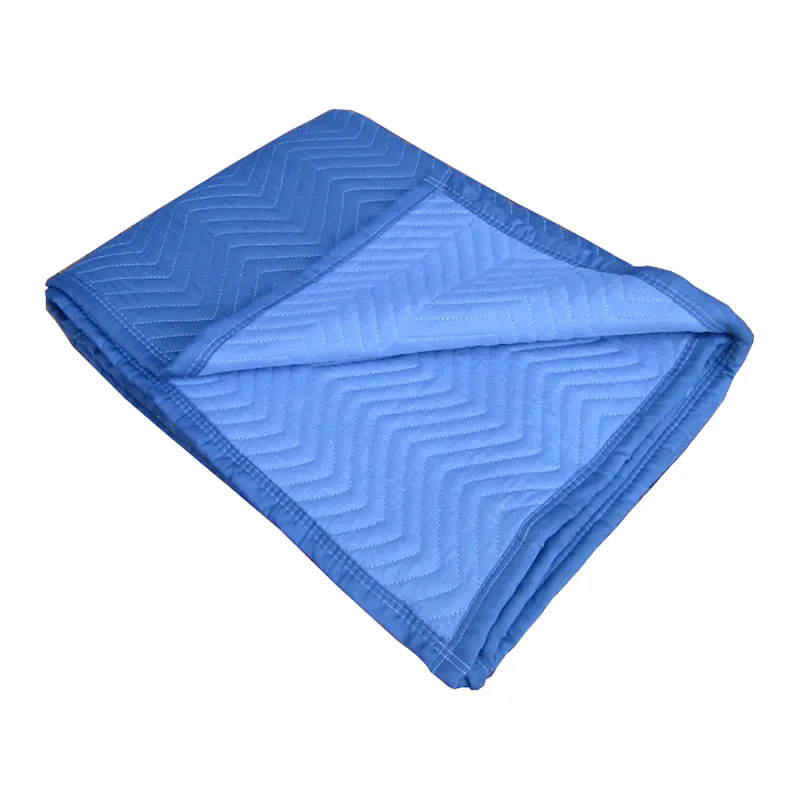
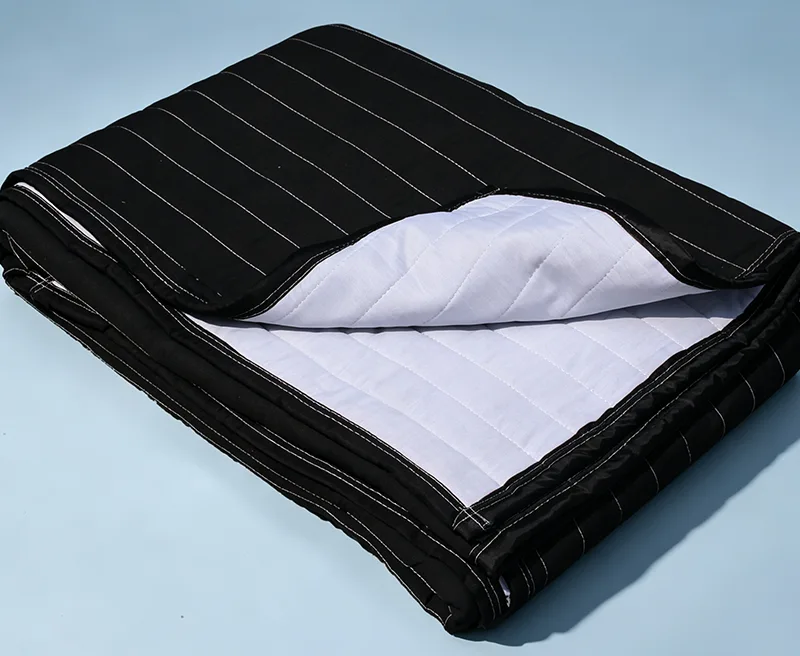
A cargo transport operation is judged not by what it delivers, but by what it delivers undamaged. Every shipment of furniture, appliances, fixtures, or finished goods carries a risk of impact, abrasion, and moisture damage during loading, transit, and unloading. The Moving Blanket is the first line of defense against these risks. It is a heavy-duty padded quilt that wraps around cargo to absorb impact, prevent surface scratches, and provide a barrier against dust and moisture. For procurement managers at logistics companies, furniture retailers, and moving firms, understanding why Moving Blankets are vital in cargo transport is essential for selecting the right product. A blanket that is too thin will not protect the cargo. A blanket that is too heavy will slow down the loading crew. The right blanket balances protection, durability, and handling efficiency.
This guide is written for buyers who need to source Moving Blankets for cargo transport applications. We will explain the specific risks that cargo faces during transport, how Moving Blankets address each risk, the material and construction factors that determine performance, the specifications to include in a purchase order, and the criteria for evaluating a supplier. We will also provide detailed product parameters from our factory at Wenzhou Top Packaging Co., Ltd. Whether you are equipping a fleet of delivery trucks, supplying a furniture warehouse, or sourcing blankets for a moving company, this guide will help you select a Moving Blanket that protects your cargo and your bottom line.
Table of Contents
- 1. What Risks Does Cargo Face During Transport?
- 2. How Do Moving Blankets Absorb Impact and Prevent Abrasion?
- 3. Why Does Moisture and Dust Protection Matter in Cargo Transport?
- 4. What Material and Construction Factors Determine Performance?
- 5. What Specifications Should Buyers Include in a Purchase Order?
- 6. How Do You Evaluate a Moving Blanket Supplier?
- 7. What Are the Key Product Parameters from Our Factory?
- 8. Frequently Asked Questions (FAQ)
- 9. Conclusion
1. What Risks Does Cargo Face During Transport?
Cargo faces a range of risks during transport, and each risk requires a different type of protection. The most common risks are impact, abrasion, vibration, moisture, dust, and compression. Impact occurs when cargo collides with the truck wall, another item, or the loading dock. Abrasion occurs when cargo rubs against a surface during transit. Vibration occurs continuously as the vehicle moves over the road. Moisture occurs from rain, humidity, or condensation. Dust occurs from the road and the cargo itself. Compression occurs when cargo is stacked or squeezed. The table below summarizes these risks and their consequences.
| Risk | Cause | Consequence | Protection Required |
| Impact | Collision during loading or transit | Dents, cracks, broken components | Energy-absorbing padding |
| Abrasion | Rubbing against surfaces | Scratches, worn finishes | Soft, durable barrier |
| Vibration | Vehicle movement | Loosened fasteners, fatigue | Damping material |
| Moisture | Rain, humidity, condensation | Water stains, mold, rust | Moisture-resistant barrier |
| Dust | Road and cargo dust | Surface contamination | Dust barrier |
| Compression | Stacking and squeezing | Deformation, crushing | Cushioning layer |
At Top Packaging, our factory designs Moving Blankets to address these risks. We understand that cargo transport is a demanding environment, and we work with our customers to select the blanket that provides the right level of protection for their specific cargo and route. Our goal is to help our customers reduce damage claims and improve customer satisfaction.
2. How Do Moving Blankets Absorb Impact and Prevent Abrasion?
Moving Blankets absorb impact through their quilted construction. The blanket consists of an outer shell and an inner core of dense fibers. When the blanket is compressed by an impact, the fibers deform and press against each other, absorbing the energy of the collision. The energy is distributed over a larger area, reducing the peak force that reaches the cargo. The outer shell then returns to its original shape, ready to absorb the next impact. Abrasion is prevented by the soft, smooth surface of the outer shell, which creates a barrier between the cargo and the rough surfaces of the truck or other items. The table below shows the relationship between blanket thickness and impact absorption.
| Blanket Thickness | Typical Weight | Impact Absorption | Recommended Application |
| 5 - 8 mm | 1.5 - 2.0 kg | Moderate | Light cargo, short routes |
| 8 - 12 mm | 2.0 - 3.0 kg | Good | General cargo, medium routes |
| 12 - 15 mm | 3.0 - 4.0 kg | Excellent | Heavy cargo, long routes |
At our factory, we manufacture Moving Blankets in a range of thicknesses and weights to suit different cargo transport applications. We use high-density recycled cotton and synthetic fibers to achieve the desired level of impact absorption. Our quality control team tests the impact absorption of every production batch to ensure that it meets our specifications. Our goal is to provide our customers with blankets that protect their cargo effectively.
3. Why Does Moisture and Dust Protection Matter in Cargo Transport?
Moisture and dust are often overlooked risks in cargo transport, but they can cause significant damage. Moisture can come from rain entering through gaps in the truck, from condensation forming on cold surfaces, or from the cargo itself. Once moisture reaches the cargo, it can cause water stains, mold growth, and rust on metal components. Dust can come from the road, from the cargo, or from the truck itself. It can settle on surfaces and cause contamination, especially for furniture, appliances, and finished goods. A Moving Blanket provides a barrier against both moisture and dust. The outer shell of the blanket is typically made from a tightly woven fabric that resists water penetration and traps dust particles. The table below summarizes the moisture and dust protection provided by Moving Blankets.
| Risk | Source | Blanket Protection | Recommended Specification |
| Rain | Gaps in truck enclosure | Water-resistant outer shell | Tightly woven cotton or polyester |
| Condensation | Temperature changes | Barrier against moisture | Breathable fabric to reduce condensation |
| Dust | Road and cargo | Dust barrier | Dense weave, smooth surface |
| Contamination | Cargo contact | Clean, soft surface | Washable or disposable outer shell |
At Wenzhou Top Packaging Co., Ltd., our factory offers Moving Blankets with outer shells that provide moisture and dust protection. We can specify the fabric type and the finish to suit the specific cargo and the transport conditions. Our goal is to provide our customers with blankets that protect their cargo from all the risks of transport.
4. What Material and Construction Factors Determine Performance?
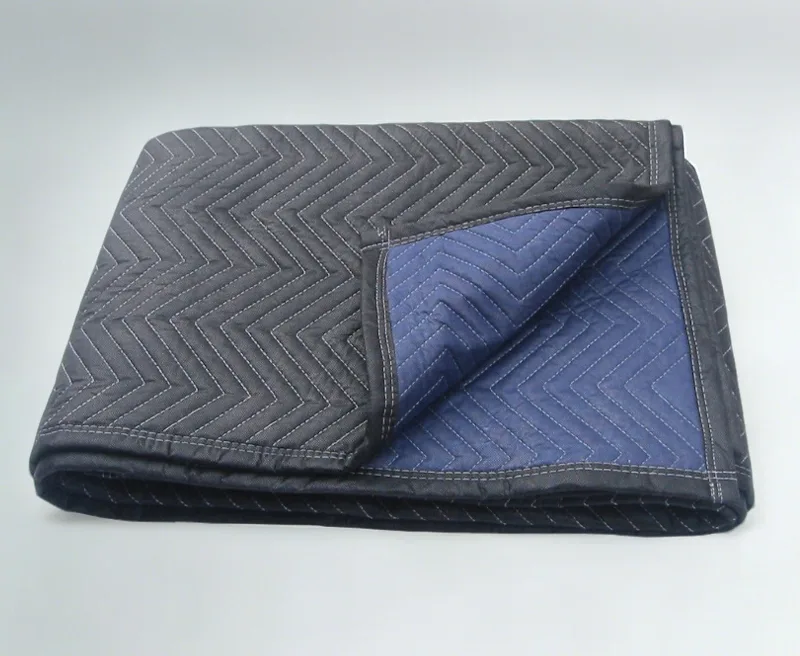
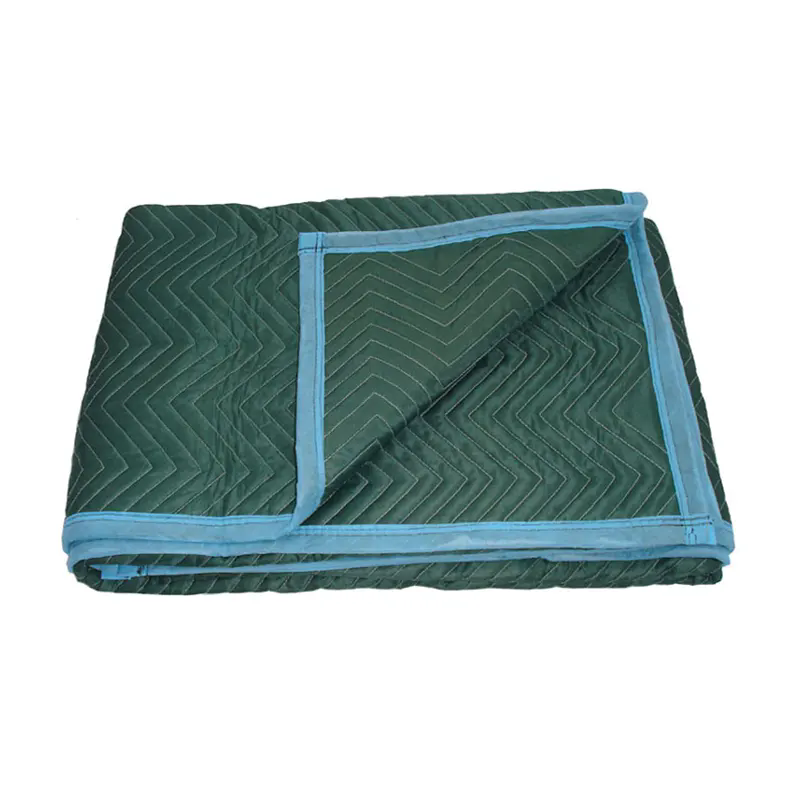
The performance of a Moving Blanket is determined by its materials and construction. The outer shell, the inner core, the quilting pattern, and the edge binding all contribute to the blanket's ability to protect cargo. The outer shell is typically made from woven cotton, polyester, or a blend. Cotton is soft and breathable, but less durable than polyester. Polyester is strong, abrasion-resistant, and water-resistant. A cotton-polyester blend offers a balance of softness and durability. The inner core is typically made from recycled cotton, which is dense and absorbent, or from foam, which is lightweight and resilient. The quilting pattern determines how the filling is distributed and how the blanket conforms to the cargo. A dense quilt pattern prevents the filling from shifting and provides more uniform protection. The edge binding prevents fraying and extends the life of the blanket. The table below summarizes the material and construction options.
| Component | Material Options | Performance Characteristics |
| Outer Shell | Cotton, Polyester, Blend | Cotton: soft, breathable; Polyester: durable, water-resistant |
| Inner Core | Recycled Cotton, Foam, Felt | Recycled cotton: dense, absorbent; Foam: lightweight, resilient |
| Quilting Pattern | Diamond, Box, Channel | Diamond: uniform protection; Box: prevents shifting |
| Edge Binding | Cotton, Polyester, Nylon | Prevents fraying, extends life |
| Stitching | Single, Double, Reinforced | Double stitching for heavy-duty applications |
At our factory, we use high-quality materials and precision construction to produce Moving Blankets that meet the most demanding requirements. We offer a range of outer shell materials, inner core materials, and quilting patterns to suit different applications and budgets. Our blankets are available with double-stitched seams and reinforced edges for maximum durability. We also offer custom sizes and colors to meet specific customer requirements.
5. What Specifications Should Buyers Include in a Purchase Order?
When purchasing Moving Blankets for cargo transport, the buyer should include detailed specifications in the purchase order to ensure that the product meets the required performance and quality standards. The key specifications are the size, the weight, the outer shell material, the inner core material, the quilting pattern, the edge binding, the color, and the packaging. The size should be specified in centimeters or inches. The weight should be specified in kilograms or pounds. The outer shell and inner core materials should be specified by type and composition. The quilting pattern should be specified by type. The edge binding should be specified by material and type. The color should be specified by a color code or a sample. The packaging should be specified by the number of blankets per bale or carton. The table below summarizes the specifications that should be included in a purchase order.
| Specification | Unit of Measure | Example |
| Size | cm or inches | 200 x 250 cm |
| Weight | kg or lbs | 2.5 kg |
| Outer Shell Material | Type and composition | 100% cotton |
| Inner Core Material | Type and composition | Recycled cotton |
| Quilting Pattern | Type | Diamond |
| Edge Binding | Material and type | Polyester, double-stitched |
| Color | Color code or sample | Gray or custom |
| Packaging | Units per bale/carton | 10 blankets per bale |
At our factory, we work with our customers to ensure that all specifications are clearly defined and understood before production begins. We provide samples for approval and maintain strict quality control throughout the production process. Our goal is to deliver Moving Blankets that meet or exceed our customers' expectations.
6. How Do You Evaluate a Moving Blanket Supplier?
Evaluating a supplier of Moving Blankets for cargo transport requires a focus on manufacturing capability, material quality, quality control, and delivery performance. The supplier must have the capability to produce blankets in the required sizes, weights, and materials. They must use high-quality raw materials that provide consistent performance. They must have a quality control system that ensures every blanket meets the specifications. And they must have a delivery performance that meets the customer's schedule. The table below summarizes the evaluation criteria.
| Evaluation Criterion | What to Look For | Why It Matters |
| Manufacturing Capability | Quilting machines, cutting equipment, sewing lines | Ensures product quality and consistency |
| Material Quality | High-quality cotton, polyester, recycled fibers | Ensures performance and durability |
| Quality Control | ISO 9001, inspection records, testing | Ensures consistent quality |
| Delivery Performance | On-time delivery, inventory capability | Keeps operations running |
| Technical Support | Product selection, application guidance | Helps select the right product |
At our factory, we have been producing Moving Blankets for over a decade. We have a strong track record of quality, delivery, and customer satisfaction. We are ISO 9001 certified, and we maintain detailed records of all inspections. Our production capacity is among the largest in the region, and we can scale to meet large orders. Our sales team is knowledgeable and responsive, and we are committed to helping our customers succeed. We invite you to evaluate us against these criteria and to consider us as your partner for Moving Blankets.
7. What Are the Key Product Parameters from Our Factory?
The following table provides the key product parameters for our Moving Blankets. These blankets are designed for cargo transport applications, including furniture moving, appliance delivery, and general freight protection. Our factory can also produce custom blankets to meet specific requirements.
| Parameter | Specification Range | Notes |
| Size | 150 x 200 cm to 200 x 300 cm | Custom sizes available |
| Weight | 1.5 kg to 4.0 kg | Light, Medium, Heavy grades |
| Outer Shell Material | 100% Cotton, Polyester, Blend | Selected for softness and durability |
| Inner Core Material | Recycled Cotton, Foam, Felt | Selected for impact absorption |
| Quilting Pattern | Diamond, Box, Channel | Selected for protection uniformity |
| Edge Binding | Polyester, Double-Stitched | Prevents fraying, extends life |
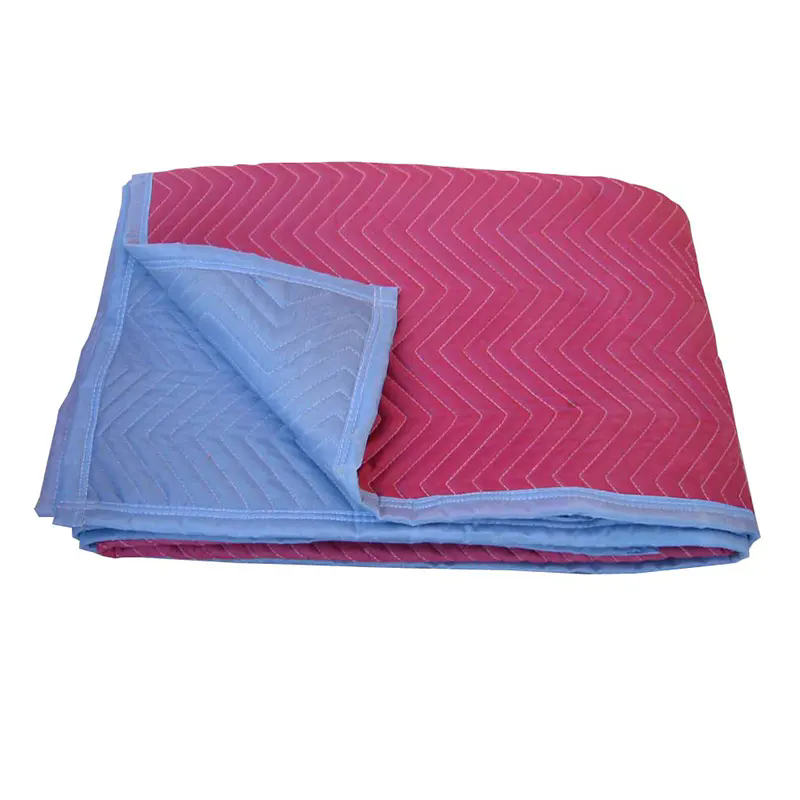
| Color | Gray, Blue, Green, Custom | Custom colors available |
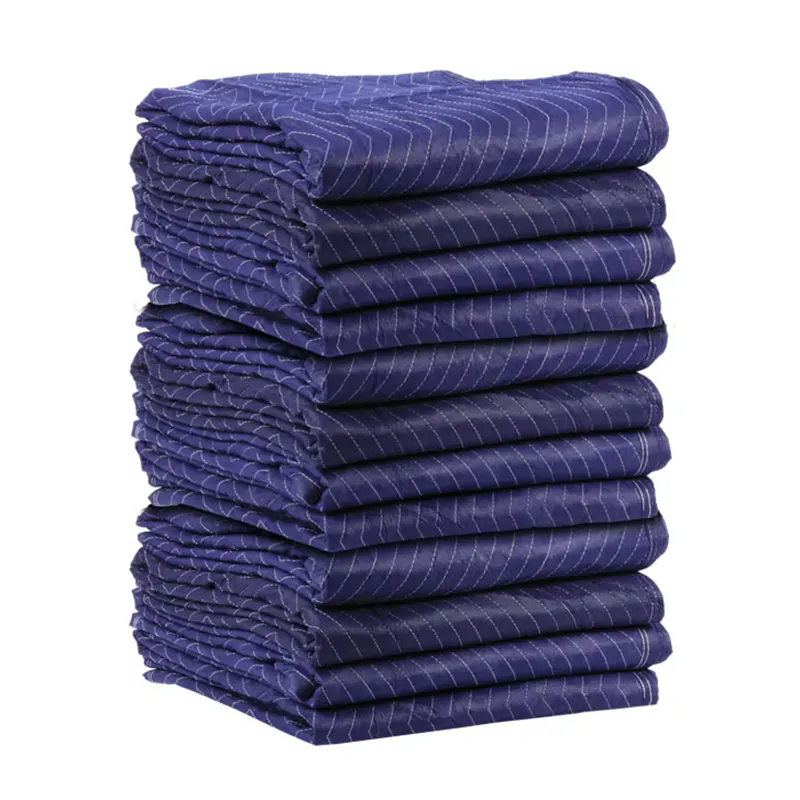
| Packaging | 5, 10, or 20 per bale | Custom packaging available |
| MOQ | 500 pieces | Negotiable for large orders |
| Lead Time | 2 - 4 weeks | Depends on quantity and customization |
At our factory, we manufacture our Moving Blankets to meet these specifications and more. We can customize the size, weight, materials, and color to suit your specific requirements. Our quality control system includes inspection of raw materials, in-process inspection, and final inspection before shipment. Our goal is to provide our customers with high-quality Moving Blankets that protect their cargo during transport.
8. Frequently Asked Questions (FAQ)
Question 1: Why are moving blankets vital in cargo transport?
Answer: Moving Blankets are vital because they protect cargo from the most common risks of transport: impact, abrasion, vibration, moisture, dust, and compression. Without blankets, cargo can be damaged during loading, transit, and unloading, leading to financial losses and customer dissatisfaction. A good Moving Blanket absorbs impact, prevents abrasion, and provides a barrier against moisture and dust.
Question 2: What thickness of moving blanket is best for cargo transport?
Answer: The best thickness depends on the cargo and the route. For light cargo on short routes, a 5-8 mm blanket may be sufficient. For general cargo on medium routes, an 8-12 mm blanket is recommended. For heavy cargo on long routes, a 12-15 mm blanket provides the best protection. Our team can help you select the right thickness for your specific application.
Question 3: How do I clean moving blankets after use?
Answer: Clean Moving Blankets by shaking out loose debris and spot-cleaning with a mild detergent and water. For deeper cleaning, machine wash in cold water and tumble dry on low heat. Avoid using bleach or fabric softeners. Allow the blanket to dry completely before storing to prevent mildew.
Question 4: Can moving blankets be reused?
Answer: Yes, Moving Blankets are designed to be reused. The fibers recover their shape after compression, and the quilting prevents the filling from shifting. After a transport job, inspect the blanket for tears or worn spots. If the blanket is still intact, it can be reused for future jobs. Proper storage in a dry, clean area extends the life of the blanket.
Question 5: What is the minimum order quantity for custom moving blankets?
Answer: Our minimum order quantity for custom Moving Blankets is 500 pieces. For large orders, we offer competitive pricing and flexible customization options. Please contact our sales team to discuss your specific requirements.
9. Conclusion
Moving Blankets are vital in cargo transport because they protect cargo from impact, abrasion, vibration, moisture, dust, and compression. The right blanket provides the right level of protection for the cargo and the route, reducing damage claims and improving customer satisfaction. At Wenzhou Top Packaging Co., Ltd., our factory has the expertise and the equipment to produce high-quality Moving Blankets for cargo transport applications. We use high-quality materials, precision construction, and rigorous quality control to ensure that every blanket meets our specifications.
Whether you are equipping a fleet of delivery trucks, supplying a furniture warehouse, or sourcing blankets for a moving company, we invite you to contact us to discuss your requirements. We can provide samples, quotes, and customized solutions. Our commitment to quality and customer satisfaction has made us a trusted partner for businesses around the world.
Contact Wenzhou Top Packaging Co., Ltd. today to discuss your Moving Blanket requirements and discover how our products can protect your cargo during transport.
Previous :
-
Related News
- How Are Moving Blankets Used for Fitness Equipment Transport?
- How Do Moving Blankets Absorb Impact During Transportation?
- Why Do Moving Blankets Reduce Friction Between Items?
- How Do Moving Blankets Protect Appliances During Delivery?
- When Should You Use Moving Blankets Instead of Foam?
- Why Are Moving Blankets Essential for Furniture Protection?
Leave me a message
New Products

News Recommendations