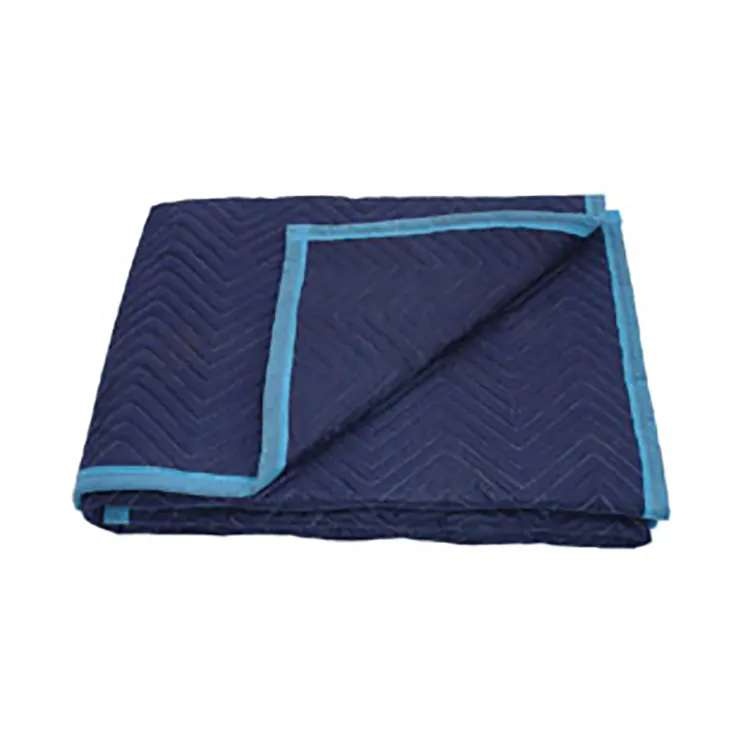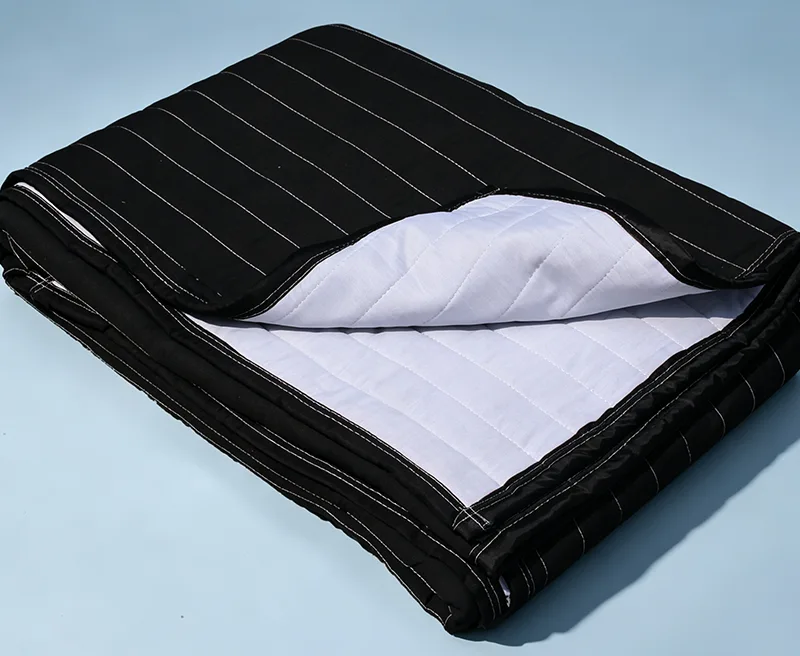
How Do Moving Blankets Absorb Impact During Transportation?
A moving truck pulls away from a curb, and a dresser slides six inches before hitting the truck wall. A forklift lowers a pallet of furniture onto a loading dock, and the edge of the pallet makes contact with a polished table. A delivery van brakes hard, and a stack of chairs shifts forward. In each of these moments, the furniture is subjected to an impact force. The Moving Blankets wrapped around the furniture are the only barrier between that force and a scratch, a dent, or a crack. For procurement managers at moving companies and furniture logistics firms, understanding how Moving Blankets absorb impact is essential for selecting the right product. A blanket that is too thin will not absorb the energy. A blanket that is too heavy will be difficult to handle. The right blanket balances density, thickness, and flexibility to protect furniture without slowing down the crew.
This guide is written for buyers who need to evaluate Moving Blankets for impact absorption. We will explain the physics of impact absorption, the material properties that determine a blanket's ability to absorb energy, the role of quilting and construction, and the criteria for selecting the right blanket for different types of furniture. We will also provide detailed product parameters from our factory at Wenzhou Top Packaging Co., Ltd. Whether you are equipping a fleet of moving trucks, supplying a furniture retail chain, or sourcing blankets for a warehouse, this guide will help you select a Moving Blanket that provides reliable impact protection.
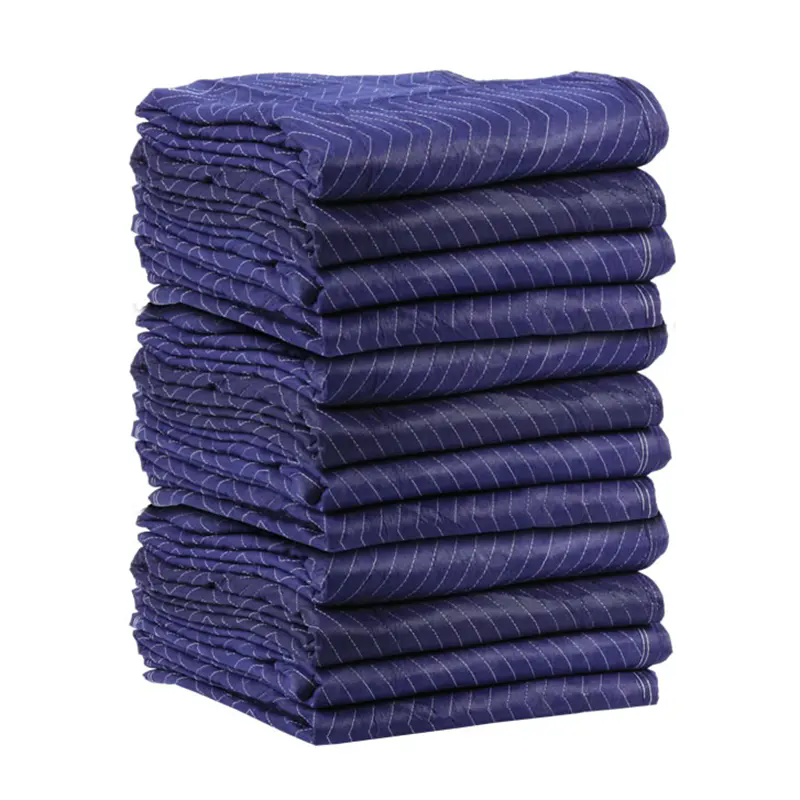
Table of Contents
- 1. What Is Impact Absorption and Why Does It Matter for Furniture Transport?
- 2. How Does Fiber Density Determine a Moving Blanket's Energy Absorption Capacity?
- 3. Why Does Quilting Pattern Affect Impact Distribution?
- 4. How Do Different Materials Perform Under Impact?
- 5. How Do You Match the Blanket to the Furniture Type?
- 6. How Do You Evaluate a Moving Blanket Supplier?
- 7. What Are the Key Product Parameters from Our Factory?
- 8. Frequently Asked Questions (FAQ)
- 9. Conclusion
1. What Is Impact Absorption and Why Does It Matter for Furniture Transport?
Impact absorption is the ability of a material to take kinetic energy from a collision and dissipate it before it reaches the protected object. When a piece of furniture hits a truck wall or another piece of furniture, the energy of the collision must go somewhere. Without a blanket, that energy is absorbed by the furniture itself, causing dents, scratches, or cracks. With a blanket, the energy is absorbed by the blanket's fibers, which deform and recover, spreading the force over a larger area and a longer time. This reduces the peak force that reaches the furniture and prevents damage. The table below summarizes the impact absorption process.
| Stage | What Happens | Effect on Furniture |
| Collision | Furniture contacts truck wall or another object | Kinetic energy is generated |
| Blanket Compression | Blanket fibers compress and deform | Energy is absorbed by the blanket |
| Force Distribution | Force spreads over a larger area | Peak force on furniture is reduced |
| Recovery | Blanket fibers return to original shape | Blanket can be reused |
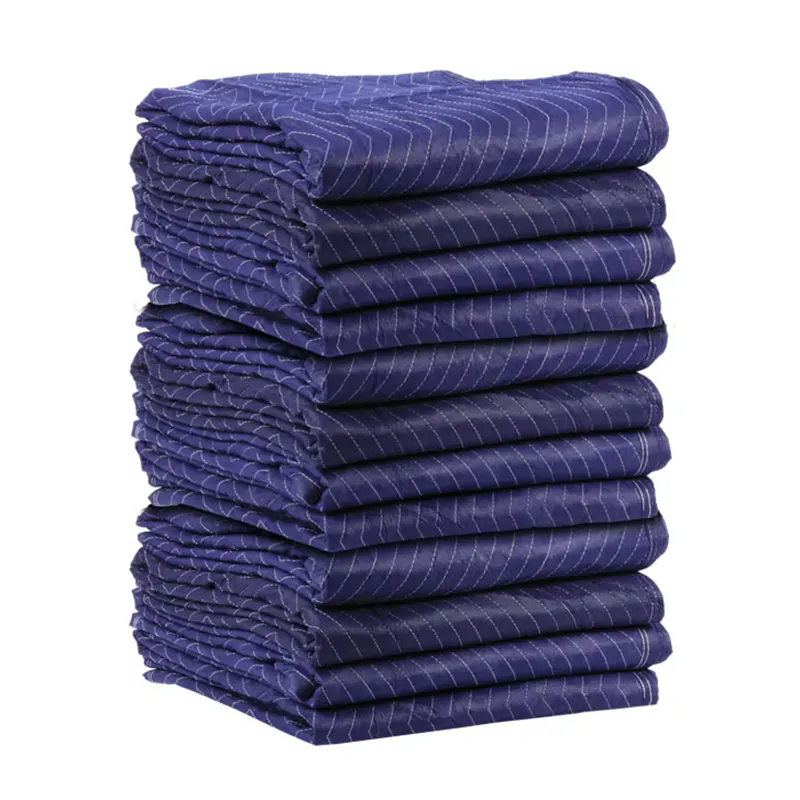
At Top Packaging, our factory designs Moving Blankets with impact absorption in mind. We understand that the blanket is not just a cover; it is a protective barrier that must absorb energy and distribute force. Our blankets are made from high-density fibers and quilted to keep the filling evenly distributed, ensuring consistent impact protection across the entire surface.
2. How Does Fiber Density Determine a Moving Blanket's Energy Absorption Capacity?
Fiber density is the most important factor in a Moving Blanket's ability to absorb impact. Density refers to the mass of fibers per unit volume. A higher density means more fibers are packed into the same space, which increases the blanket's ability to absorb energy. When the blanket is compressed, the fibers press against each other and deform, creating a resistance that slows the impact. A low-density blanket will compress too easily and bottom out, allowing the impact to reach the furniture. A high-density blanket will absorb more energy before bottoming out, providing better protection. The table below shows the relationship between fiber density and impact absorption.
| Density Level | Typical Weight | Impact Absorption | Recommended Application |
| Low Density | 1.5 - 2.0 kg | Moderate | Light furniture, chairs, small items |
| Medium Density | 2.0 - 3.0 kg | Good | Sofas, dressers, mattresses |
| High Density | 3.0 - 4.0 kg | Excellent | Pianos, refrigerators, heavy furniture |
At our factory, we use recycled cotton and synthetic fibers to achieve the desired density for each blanket grade. We control the fiber blending and the quilting process to ensure that the density is consistent across the entire blanket. Our quality control team measures the weight and thickness of every production batch to verify that it meets our specifications.
3. Why Does Quilting Pattern Affect Impact Distribution?
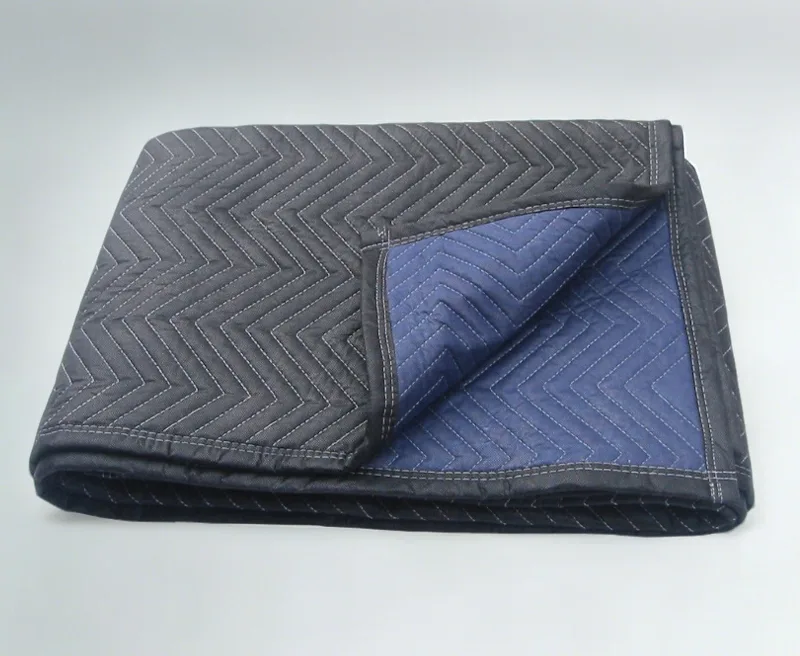
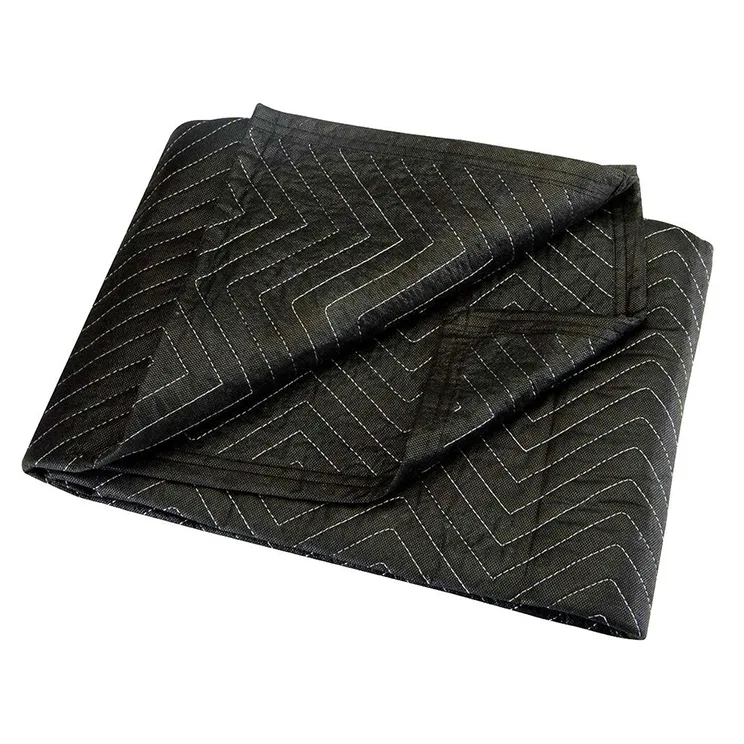
The quilting pattern is the stitching that holds the filling in place. It determines how the filling is distributed and how the blanket behaves under impact. A dense quilting pattern with small, closely spaced stitches prevents the filling from shifting and ensures that the impact is distributed evenly across the blanket. A loose quilting pattern allows the filling to migrate, creating thin spots where the impact protection is reduced. The most common quilting patterns are diamond, box, and channel. Diamond quilting provides uniform protection in all directions. Box quilting creates a grid that prevents filling migration. Channel quilting creates vertical channels that allow the blanket to drape over furniture. The table below compares these quilting patterns.
| Quilting Pattern | Description | Impact Distribution | Typical Application |
| Diamond | Diagonal stitching pattern | Uniform in all directions | General furniture protection |
| Box | Square grid stitching | Prevents filling migration | Heavy furniture, pianos |
| Channel | Vertical stitching lines | Good drape, moderate protection | Sofas, mattresses |
At Wenzhou Top Packaging Co., Ltd., our factory uses computer-controlled quilting machines to produce consistent patterns across every blanket. We can customize the quilting pattern to suit different furniture types and protection requirements. Our goal is to provide Moving Blankets that distribute impact evenly and protect furniture effectively.
4. How Do Different Materials Perform Under Impact?
The material of a Moving Blanket determines its impact absorption, durability, and cost. The most common materials are recycled cotton, synthetic fibers, and foam. Recycled cotton is dense and absorbent, making it excellent for impact absorption. It is also durable and can withstand repeated use. Synthetic fibers, such as polyester, are lighter and more resilient than cotton, but they may not absorb impact as effectively. Foam is lightweight and provides good cushioning, but it can degrade over time and lose its resilience. The table below compares these materials.
| Material | Impact Absorption | Durability | Weight | Cost |
| Recycled Cotton | Excellent | High | Heavy | Medium |
| Polyester Fiber | Good | High | Light | Medium |
| Foam | Good | Moderate | Light | Low |
| Cotton-Poly Blend | Very Good | High | Medium | Medium |
At our factory, we use recycled cotton as the primary filling material for our Moving Blankets because of its excellent impact absorption and durability. We also offer polyester and foam options for applications that require lighter weight or lower cost. Our engineering team can help you select the right material for your specific furniture protection needs.
5. How Do You Match the Blanket to the Furniture Type?
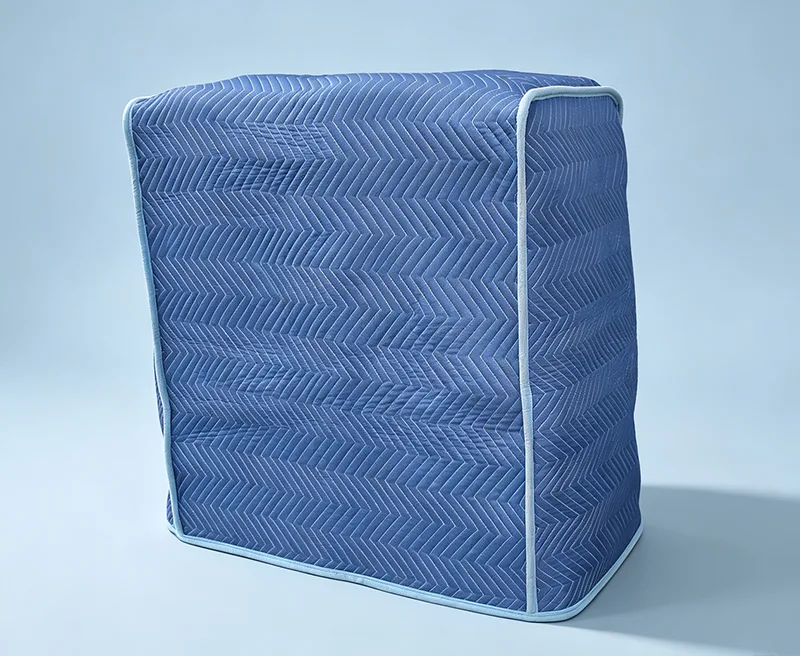
Matching the Moving Blanket to the furniture type is essential for effective impact protection. Different furniture types have different weights, shapes, and fragility levels. A heavy piano requires a high-density blanket with box quilting to absorb the impact of its mass. A lightweight chair may only need a low-density blanket. A sofa with delicate fabric may require a soft, non-abrasive blanket that will not scratch the surface. The table below provides a guide to matching blankets to furniture types.
| Furniture Type | Recommended Density | Recommended Quilting | Number of Blankets |
| Chair | Low (1.5 - 2.0 kg) | Diamond | 1 |
| Dresser | Medium (2.0 - 3.0 kg) | Diamond or Box | 2 |
| Sofa (3-seater) | Medium (2.0 - 3.0 kg) | Channel or Diamond | 2 |
| Mattress (Queen) | Medium (2.0 - 3.0 kg) | Channel | 2 |
| Refrigerator | High (3.0 - 4.0 kg) | Box | 2 |
| Piano (Upright) | High (3.0 - 4.0 kg) | Box | 3 |
At Top Packaging, our factory produces Moving Blankets in a range of densities and quilting patterns to suit different furniture types. Our sales team can help you select the right blanket for your specific application. We also offer custom sizes and colors to meet your requirements.
6. How Do You Evaluate a Moving Blanket Supplier?
Evaluating a supplier of Moving Blankets for impact absorption requires a focus on material quality, density control, quilting consistency, and testing capability. The supplier must use high-quality fibers that provide consistent density and resilience. They must control the quilting process to ensure that the filling is evenly distributed. They must test the blankets for impact absorption and durability. And they must provide documentation to verify the specifications. The table below summarizes the evaluation criteria.
| Evaluation Criterion | What to Look For | Why It Matters |
| Material Quality | High-quality recycled cotton, polyester | Ensures consistent impact absorption |
| Density Control | Consistent weight and thickness across batches | Ensures reliable protection |
| Quilting Consistency | Computer-controlled quilting, uniform pattern | Prevents filling migration and thin spots |
| Testing Capability | Impact testing, durability testing | Verifies performance claims |
| Documentation | Material certs, test reports | Supports quality assurance |
At our factory, we have been producing Moving Blankets for over a decade. We source high-quality fibers from certified suppliers and use computer-controlled quilting machines to ensure consistent density and pattern. We perform impact and durability testing on every production batch. And we provide complete documentation with every shipment. We invite you to evaluate us against these criteria and to consider us as your partner for Moving Blankets.
7. What Are the Key Product Parameters from Our Factory?
The following table provides the key product parameters for our Moving Blankets. These blankets are designed for impact absorption during furniture transportation. Our factory can also produce custom blankets to meet specific requirements.
| Parameter | Specification Range | Notes |
| Size | 150 x 200 cm to 200 x 300 cm | Custom sizes available |
| Weight | 1.5 kg - 4.0 kg | Light, Medium, Heavy grades |
| Filling Material | Recycled Cotton, Polyester, Foam | Selected for impact absorption |
| Outer Shell | Cotton, Polyester, Blend | Selected for durability and softness |
| Quilting Pattern | Diamond, Box, Channel | Selected for impact distribution |
| Edge Binding | Polyester, Double-Stitched | Prevents fraying and extends life |
| Color | Gray, Blue, Green, Custom | Custom colors available |
| MOQ | 500 pieces | Negotiable for large orders |
| Lead Time | 2 - 4 weeks | Depends on quantity and customization |
At our factory, we manufacture our Moving Blankets to meet these specifications and more. We can customize the size, weight, filling material, and quilting pattern to suit your specific requirements. Our quality control system includes inspection of raw materials, in-process inspection, and final inspection before shipment. Our goal is to provide our customers with high-quality Moving Blankets that provide reliable impact protection for their furniture.
8. Frequently Asked Questions (FAQ)
Question 1: How does fiber density affect impact absorption in moving blankets?
Answer: Fiber density determines how much energy the blanket can absorb before it bottoms out. A higher density means more fibers are packed into the same space, which increases the blanket's ability to resist compression and absorb impact. For heavy furniture such as pianos or refrigerators, a high-density blanket (3.0-4.0 kg) is recommended. For lighter items such as chairs, a low-density blanket (1.5-2.0 kg) may be sufficient.
Question 2: What is the best quilting pattern for impact protection?
Answer: The best quilting pattern depends on the application. Diamond quilting provides uniform protection in all directions and is suitable for general furniture. Box quilting creates a grid that prevents filling migration and is ideal for heavy furniture. Channel quilting allows the blanket to drape over furniture and is suitable for sofas and mattresses. At Wenzhou Top Packaging Co., Ltd., we offer all three patterns and can help you select the right one for your needs.
Question 3: How many moving blankets do I need to protect a piece of furniture?
Answer: The number of blankets depends on the size and weight of the furniture. As a general guideline, a chair needs one blanket, a dresser or sofa needs two, and a piano or refrigerator needs three. It is always better to use more blankets than fewer, as the extra layers provide additional impact absorption and protect against unforeseen collisions during transport.
Question 4: Can moving blankets be reused after impact?
Answer: Yes, Moving Blankets are designed to be reused. The fibers recover their shape after compression, and the quilting prevents the filling from shifting. After a move, inspect the blanket for tears or worn spots. If the blanket is still intact, it can be reused for future moves. Proper storage in a dry, clean area extends the life of the blanket.
Question 5: How do I clean a moving blanket after use?
Answer: Moving Blankets can be cleaned by shaking out loose debris and spot-cleaning with a mild detergent and water. For deeper cleaning, machine wash in cold water and tumble dry on low heat. Avoid using bleach or fabric softeners, as these can damage the fibers. Allow the blanket to dry completely before storing to prevent mildew.
9. Conclusion
Moving Blankets absorb impact during transportation by compressing under force, distributing the energy over a larger area, and recovering to their original shape. The key factors that determine a blanket's impact absorption are fiber density, quilting pattern, and material selection. By understanding these factors and matching the blanket to the furniture type, buyers can ensure that their furniture arrives at its destination without damage. At Wenzhou Top Packaging Co., Ltd., our factory has the expertise and the equipment to produce high-quality Moving Blankets that provide reliable impact protection. We use high-density fibers, computer-controlled quilting, and rigorous testing to ensure that every blanket meets our specifications.
Whether you are equipping a fleet of moving trucks, supplying a furniture retail chain, or sourcing blankets for a warehouse, we invite you to contact us to discuss your requirements. We can provide samples, technical data, and customized solutions. Our commitment to quality and customer satisfaction has made us a trusted partner for businesses around the world.
Contact Wenzhou Top Packaging Co., Ltd. today to discuss your Moving Blanket requirements and discover how our products can protect your furniture during transportation.
Previous :
-
Related News
- Why Do Moving Blankets Reduce Friction Between Items?
- How Do Moving Blankets Protect Appliances During Delivery?
- When Should You Use Moving Blankets Instead of Foam?
- Why Are Moving Blankets Essential for Furniture Protection?
- What Makes an Economy Moving Blanket the Smartest Choice for Protecting Your Furniture During a Move?
- Non-Woven Bag - Environmentally Friendly, Durable, and Multifunctional Portable Storage Container
Leave me a message
News Recommendations