How Do Moving Blankets Protect Appliances During Delivery?
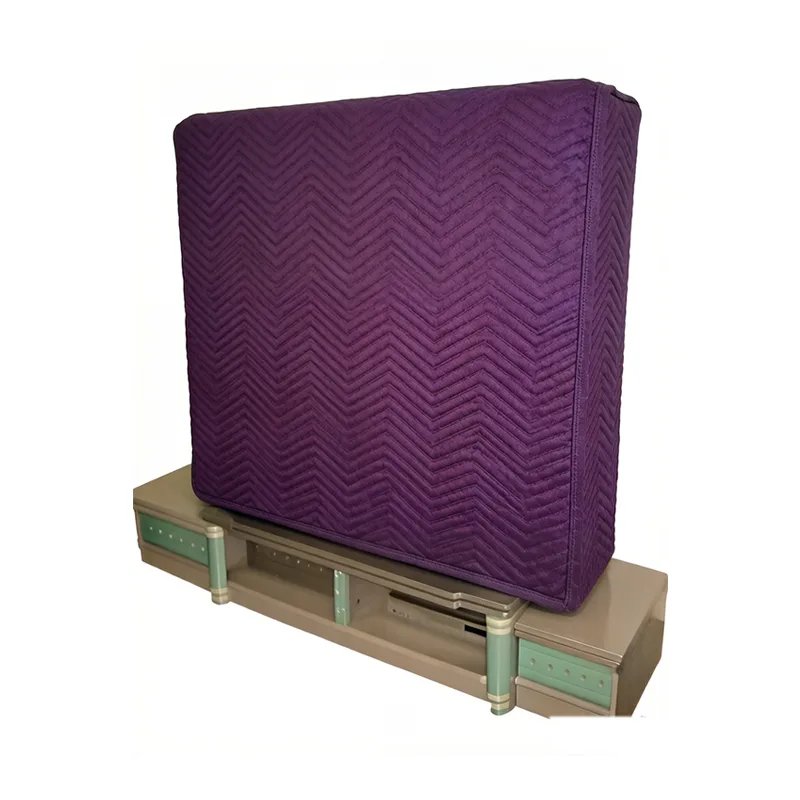
An appliance delivery crew is maneuvering a stainless steel refrigerator through a narrow doorway. The unit is heavy, awkward, and expensive. One wrong move against the door frame, and the brushed finish is scratched, the door is dented, and the customer rejects the delivery. This is the daily reality of appliance delivery. Unlike furniture, appliances have large flat surfaces, protruding handles, and delicate finishes that are highly visible and expensive to repair. The Moving Blanket is the primary defense against these risks. It absorbs impact, prevents abrasion, and protects the finish from dust and debris during transport and handling. For procurement managers at appliance retailers, delivery companies, and logistics providers, selecting the right Moving Blankets is a decision that directly affects damage rates, customer satisfaction, and operating costs.
This guide is written for buyers who need to source Moving Blankets that provide reliable protection for appliances during delivery. We will explain how moving blankets protect appliances, the materials and construction that determine performance, the weight and size options for different appliance types, the specifications to include in a purchase order, and the criteria for evaluating a supplier. We will also provide detailed product parameters from our factory at Wenzhou Top Packaging Co., Ltd. Whether you are equipping a delivery fleet or sourcing blankets for a retail operation, this guide will help you make an informed decision.
Table of Contents
- 1. What Risks Do Appliances Face During Delivery?
- 2. How Does a Moving Blanket Absorb Impact and Prevent Abrasion?
- 3. What Materials and Construction Determine Protection Level?
- 4. What Weight and Size Options Suit Different Appliances?
- 5. What Specifications Should Buyers Include in a Purchase Order?
- 6. How Do You Evaluate a Moving Blanket Supplier?
- 7. What Are the Key Product Parameters from Our Factory?
- 8. Frequently Asked Questions (FAQ)
- 9. Conclusion
1. What Risks Do Appliances Face During Delivery?
Appliances face a unique set of risks during delivery that differ from the risks faced by furniture. The first risk is surface damage. Appliances often have large, flat surfaces with highly visible finishes, such as stainless steel, painted metal, or glass. These surfaces are prone to scratches, scuffs, and dents. A single scratch on a stainless steel refrigerator can be immediately visible and can lead to a customer rejection. The second risk is impact damage. Appliances are heavy and awkward to handle. They can be dropped, bumped against walls, or struck by other items in the truck. The third risk is damage to protruding parts. Handles, knobs, and control panels are vulnerable to impact and can be broken or bent. The fourth risk is contamination. Dust, dirt, and moisture can damage the finish or enter the appliance through vents and openings. The table below summarizes these risks.
| Risk | Cause | Consequence | Protection Required |
| Surface Scratches | Abrasion against walls, doors, other items | Cosmetic damage, customer rejection | Abrasion-resistant barrier |
| Dents | Impact from bumps and drops | Structural damage, functional issues | Impact-absorbing padding |
| Handle and Knob Damage | Impact on protruding parts | Broken or bent parts | Padding around protrusions |
| Contamination | Dust, dirt, moisture | Finish damage, internal damage | Clean, dry covering |
| Glass Breakage | Impact on oven doors, refrigerator glass | Shattering, safety hazard | Thick padding and secure wrapping |
At Wenzhou Top Packaging Co., Ltd., our factory produces Moving Blankets that are specifically designed to address these risks. We use high-quality materials and construction to ensure that our blankets provide reliable protection for appliances during delivery. Our product range includes blankets in different weights and sizes to suit different appliance types.
2. How Does a Moving Blanket Absorb Impact and Prevent Abrasion?
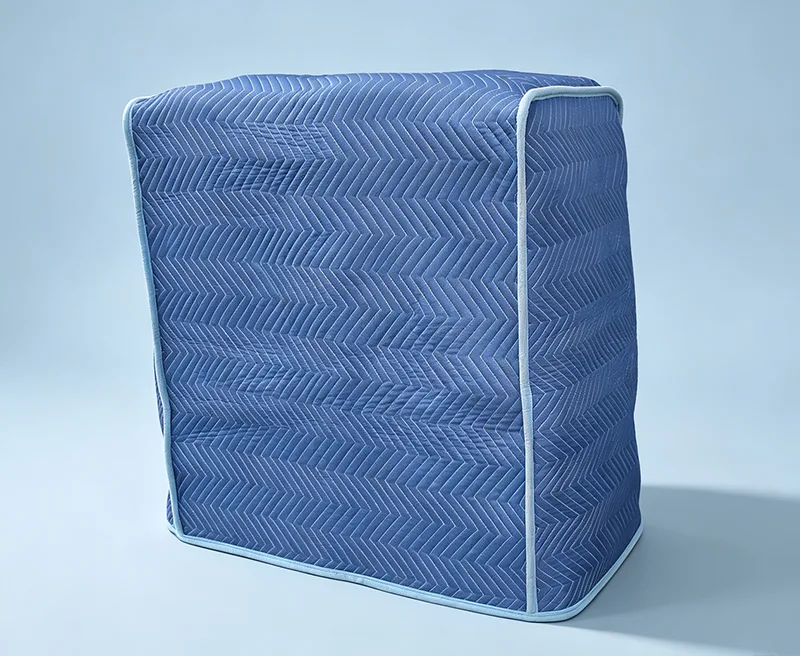
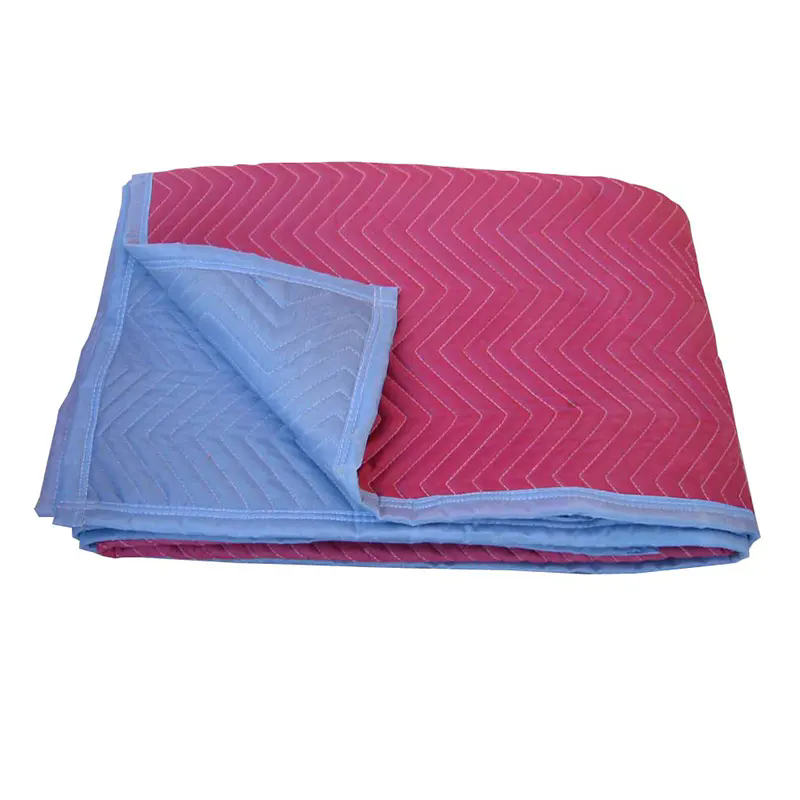
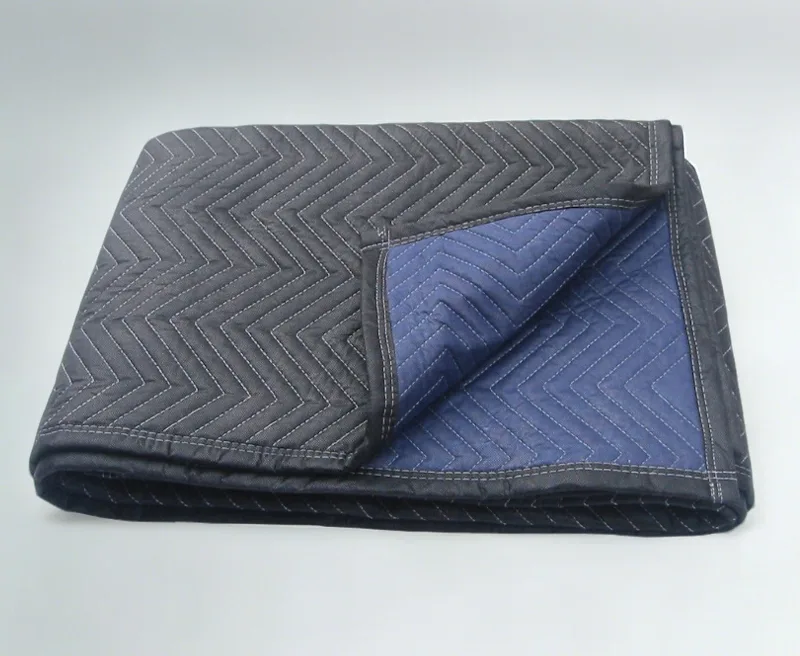
A Moving Blanket protects appliances through two primary mechanisms: impact absorption and abrasion resistance. Impact absorption is provided by the blanket's padding. When an appliance is bumped or dropped, the padding compresses, absorbing the kinetic energy and spreading the force over a larger area. This reduces the peak force on the appliance's surface and prevents dents. Abrasion resistance is provided by the blanket's outer shell. The shell is a tightly woven fabric that creates a barrier between the appliance and the rough surfaces it may contact. When the appliance rubs against a wall or a door frame, the blanket's shell takes the abrasion, protecting the appliance's finish. The table below illustrates how the blanket's components work together to protect the appliance.
| Component | Protection Mechanism | Benefit for Appliances |
| Outer Shell | Abrasion-resistant barrier | Prevents scratches and scuffs |
| Inner Padding | Impact absorption and force distribution | Prevents dents and structural damage |
| Quilting | Holds padding in place | Ensures uniform protection |
| Edge Binding | Prevents fraying and unraveling | Extends blanket life |
At our factory, we use high-quality materials and precision manufacturing to produce Moving Blankets that provide reliable protection. We use dense recycled cotton padding for impact absorption and tightly woven cotton or polyester shells for abrasion resistance. We also use double-stitched seams and reinforced edges for durability. Our blankets are tested for impact absorption and abrasion resistance to ensure that they meet our high standards.
3. What Materials and Construction Determine Protection Level?
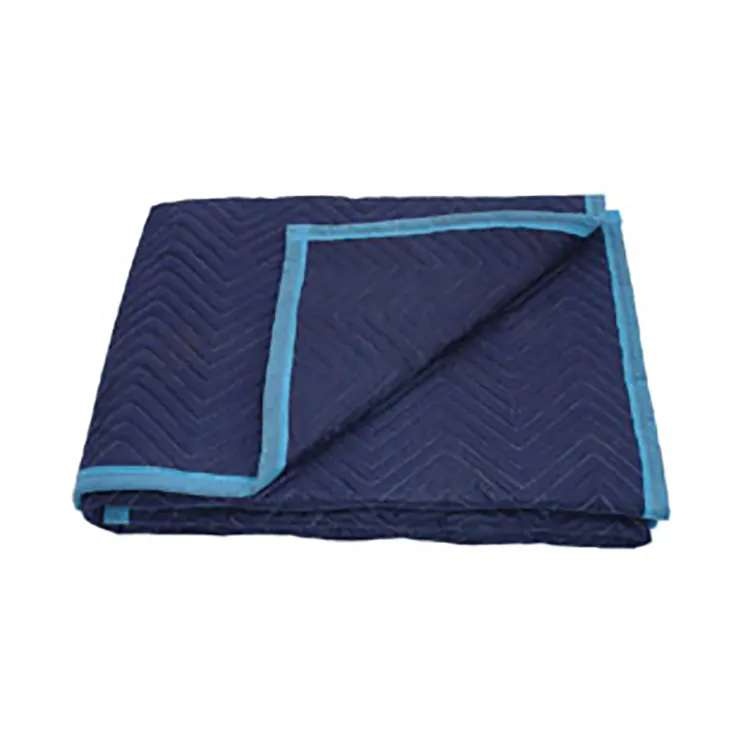
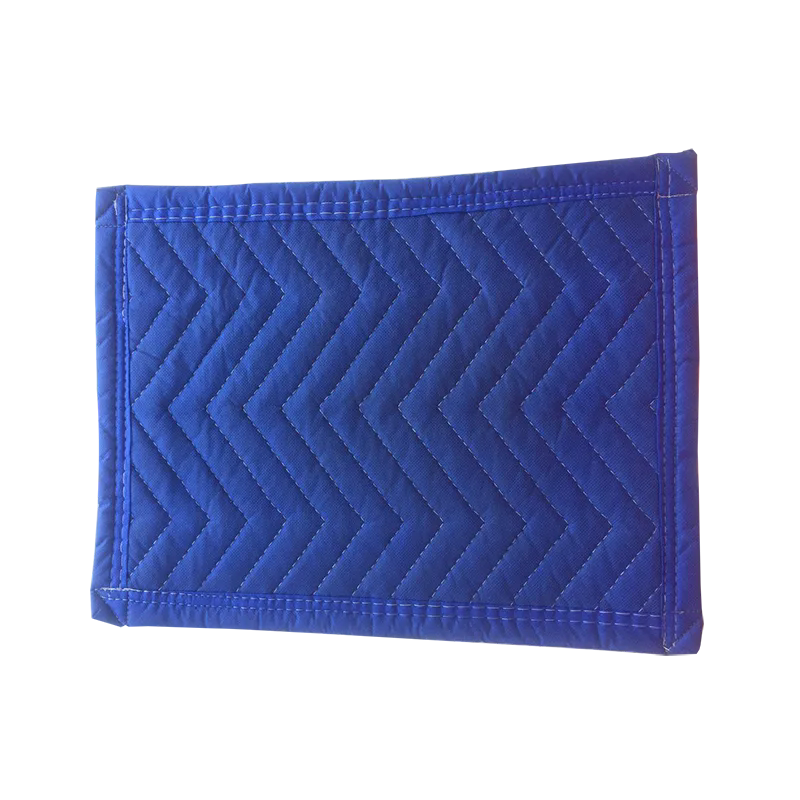
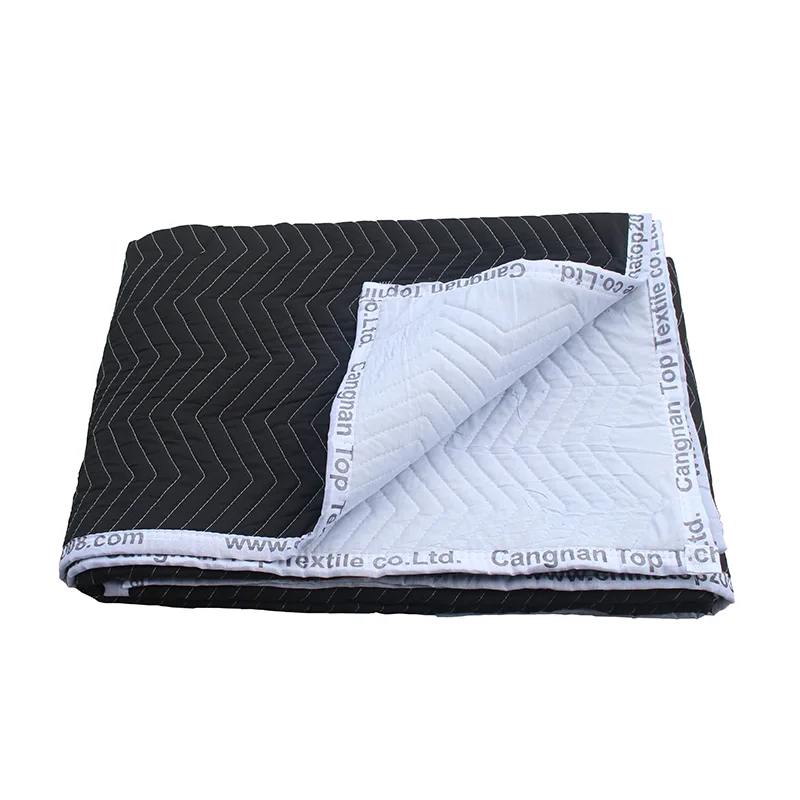
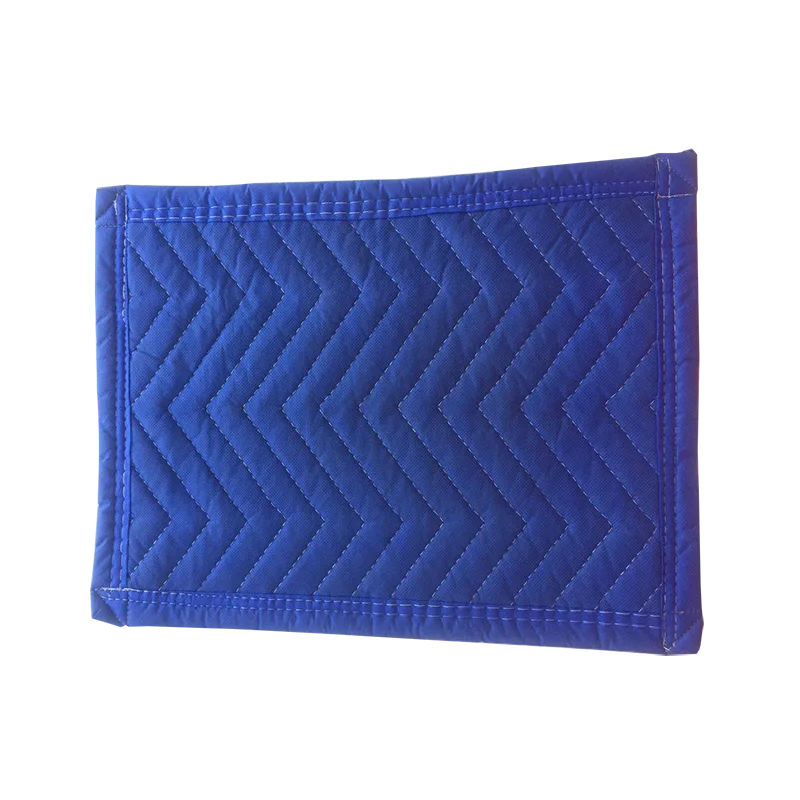
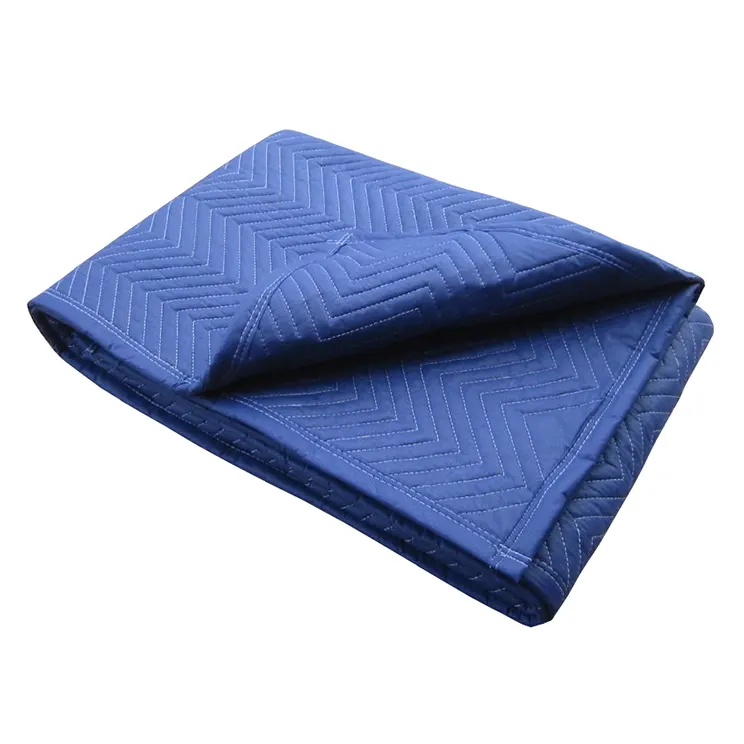
The protection level of a Moving Blanket is determined by its materials and construction. The outer shell, the inner padding, the quilting pattern, and the edge binding all contribute to the blanket's performance. The outer shell is typically made from woven cotton, polyester, or a blend. Cotton is soft and breathable but less durable than synthetic fabrics. Polyester is strong, abrasion-resistant, and quick-drying. A cotton-polyester blend offers a balance of softness and durability. The inner padding is typically made from recycled cotton, which is dense and absorbent, or from foam, which is lightweight and resilient. The quilting pattern determines how the padding is distributed and how the blanket conforms to the appliance. A dense quilt pattern prevents the padding from shifting and provides more uniform protection. The edge binding prevents fraying and extends the life of the blanket. The table below summarizes the materials and construction options.
| Component | Material Options | Protection Characteristics |
| Outer Shell | Cotton, Polyester, Cotton-Poly Blend | Cotton: soft; Polyester: durable; Blend: balanced |
| Inner Padding | Recycled Cotton, Foam, Felt | Recycled cotton: dense, absorbent; Foam: lightweight |
| Quilting Pattern | Diamond, Box, Channel | Diamond: uniform protection; Box: prevents shifting |
| Edge Binding | Cotton, Polyester, Nylon | Prevents fraying, extends life |
| Stitching | Single, Double, Reinforced | Double stitching for heavy-duty applications |
At Top Packaging, our factory uses high-quality materials and precision manufacturing to produce Moving Blankets that meet the most demanding requirements. We offer a range of outer shell materials, inner padding materials, and quilting patterns to suit different applications and budgets. Our blankets are available with double-stitched seams and reinforced edges for maximum durability.
4. What Weight and Size Options Suit Different Appliances?
Moving Blankets are available in a range of weights and sizes, and the choice depends on the type of appliance being delivered and the level of protection required. Lightweight blankets, typically 1.5 to 2 kg, are suitable for small appliances, such as microwaves and small ovens. Medium-weight blankets, typically 2 to 3 kg, are suitable for most appliances, including dishwashers, washing machines, and standard refrigerators. Heavyweight blankets, typically 3 to 4 kg, are suitable for large, heavy appliances, such as side-by-side refrigerators, commercial ovens, and industrial equipment. The size of the blanket should be matched to the size of the appliance. A blanket that is too small will not provide adequate coverage. A blanket that is too large will be difficult to handle. The table below provides a guide to weight and size selection based on appliance type.
| Appliance Type | Recommended Weight | Recommended Size (cm) | Number of Blankets Required |
| Microwave | Light (1.5 - 2 kg) | 150 x 200 | 1 |
| Dishwasher | Medium (2 - 2.5 kg) | 150 x 200 | 1 |
| Washing Machine | Medium (2.5 - 3 kg) | 200 x 250 | 2 |
| Standard Refrigerator | Medium (2.5 - 3 kg) | 200 x 250 | 2 |
| Side-by-Side Refrigerator | Heavy (3 - 4 kg) | 200 x 300 | 3 |
| Commercial Oven | Heavy (3 - 4 kg) | 200 x 300 | 3-4 |
At our factory, we produce Moving Blankets in a wide range of weights and sizes. We can also produce custom sizes to meet specific requirements. Our sales team can help you select the right weight and size for your specific appliance delivery application.
5. What Specifications Should Buyers Include in a Purchase Order?
When purchasing Moving Blankets, the buyer should include detailed specifications in the purchase order to ensure that the product meets the required performance and quality standards. The key specifications are the size, the weight, the outer shell material, the inner padding material, the quilting pattern, the edge binding, the color, and the packaging. The size should be specified in centimeters or inches. The weight should be specified in kilograms or pounds. The outer shell and inner padding materials should be specified by type and composition. The quilting pattern should be specified by type (e.g., diamond, box). The edge binding should be specified by material and type (e.g., double-stitched). The color should be specified by a color code or a sample. The packaging should be specified by the number of blankets per bale or carton. The table below summarizes the specifications that should be included in a purchase order.
| Specification | Unit of Measure | Example |
| Size | cm or inches | 200 x 250 cm |
| Weight | kg or lbs | 2.5 kg |
| Outer Shell Material | Type and composition | 100% cotton |
| Inner Padding Material | Type and composition | Recycled cotton |
| Quilting Pattern | Type | Diamond |
| Edge Binding | Material and type | Polyester, double-stitched |
| Color | Color code or sample | Gray or custom |
| Packaging | Units per bale/carton | 10 blankets per bale |
At our factory, we work with our customers to ensure that all specifications are clearly defined and understood before production begins. We provide samples for approval and maintain strict quality control throughout the production process. Our goal is to deliver Moving Blankets that meet or exceed our customers' expectations.
6. How Do You Evaluate a Moving Blanket Supplier?
Evaluating a supplier of Moving Blankets is critical for ensuring a reliable supply of high-quality products. The key criteria for evaluating a supplier are manufacturing capability, quality management, material sourcing, production capacity, delivery performance, and technical support. Manufacturing capability includes the ability to produce blankets in the required sizes, weights, and materials. Quality management includes the systems and processes that ensure consistent quality. Material sourcing includes the ability to source high-quality raw materials at competitive prices. Production capacity includes the ability to meet large orders in a timely manner. Delivery performance includes the ability to meet lead times and to respond to urgent orders. Technical support includes the ability to assist with product selection and problem-solving. The table below summarizes these criteria and what to look for in each.
| Evaluation Criterion | What to Look For | Why It Matters |
| Manufacturing Capability | Quilting machines, cutting equipment, sewing lines | Ensures product quality and consistency |
| Quality Management | ISO 9001 certification, inspection records | Ensures consistent product quality |
| Material Sourcing | Reliable suppliers, quality raw materials | Ensures product performance and durability |
| Production Capacity | Monthly output, ability to scale | Ensures timely delivery of large orders |
| Delivery Performance | On-time delivery record, inventory capability | Keeps your operations running |
| Technical Support | Sales team, product knowledge | Helps you select the right product |
At Top Packaging, our factory has been producing Moving Blankets for over a decade. We have a strong track record of quality, delivery, and customer satisfaction. We are ISO 9001 certified, and we maintain detailed records of all inspections. Our production capacity is among the largest in the region, and we can scale to meet large orders. Our sales team is knowledgeable and responsive, and we are committed to helping our customers succeed.
7. What Are the Key Product Parameters from Our Factory?
The following table provides the key product parameters for our Moving Blankets. These blankets are designed for the appliance delivery industry and are available in a range of weights, sizes, and materials to suit different applications. Our factory can also produce custom blankets to meet specific requirements.
| Parameter | Specification Range | Notes |
| Size | 150 x 200 cm to 200 x 300 cm | Custom sizes available |
| Weight | 1.5 kg to 4 kg | Light, Medium, Heavy grades |
| Outer Shell Material | 100% Cotton, Polyester, Blend | Selected for softness and durability |
| Inner Padding Material | Recycled Cotton, Foam, Felt | Selected for impact absorption |
| Quilting Pattern | Diamond, Box, Channel | Selected for protection uniformity |
| Edge Binding | Polyester, Double-Stitched | Prevents fraying, extends life |
| Color | Gray, Blue, Green, Custom | Custom colors available |
| Packaging | 5, 10, or 20 per bale | Custom packaging available |
| MOQ | 500 pieces | Negotiable for large orders |
| Lead Time | 2 - 4 weeks | Depends on quantity and customization |
At our factory, we manufacture our Moving Blankets to meet these specifications and more. We can customize the size, weight, materials, and color to suit your specific requirements. Our quality control system includes inspection of raw materials, in-process inspection, and final inspection before shipment. Our goal is to provide our customers with high-quality Moving Blankets that protect appliances and enhance their delivery operations.
8. Frequently Asked Questions (FAQ)
Question 1: How many moving blankets do I need to protect a standard refrigerator?
Answer: A standard refrigerator typically requires two Moving Blankets. One blanket is used to wrap the front and sides, and the second blanket is used to cover the back and top. For larger side-by-side refrigerators, three blankets may be required. It is always better to use more blankets than you think you need, as they can also be used to protect doorways and walls during the delivery.
Question 2: What is the best weight for appliance delivery blankets?
Answer: The best weight depends on the appliance. For small appliances like microwaves, a lightweight blanket (1.5-2 kg) is sufficient. For standard appliances like dishwashers and washing machines, a medium-weight blanket (2-3 kg) is recommended. For large appliances like side-by-side refrigerators and commercial ovens, a heavyweight blanket (3-4 kg) is recommended. A medium-weight blanket is a good all-around choice for most delivery operations.
Question 3: Can moving blankets be washed?
Answer: Yes, Moving Blankets can be washed, but care should be taken to follow the manufacturer's instructions. Most blankets can be machine washed in cold water and tumble dried on low heat. Avoid using bleach or fabric softeners, as these can damage the fibers. For heavy-duty blankets, commercial laundering is recommended. Regular cleaning extends the life of the blanket and ensures that it does not transfer dirt or odors to appliances.
Question 4: What is the difference between a moving blanket and a furniture pad?
Answer: The terms "moving blanket" and "furniture pad" are often used interchangeably. Both refer to the same type of product: a heavy-duty quilted textile used to protect items during transport. Some suppliers use "furniture pad" to refer to lighter-weight blankets, while "moving blanket" refers to heavier-weight blankets. The distinction is not standardized, so it is important to check the specifications rather than relying on the name.
Question 5: How do I store moving blankets when not in use?
Answer: Moving Blankets should be stored in a dry, clean, and ventilated area. They should be folded or rolled neatly and stacked on pallets or shelves to prevent damage from moisture or pests. Avoid storing blankets in direct sunlight, as this can fade the color and weaken the fibers. Before storing, ensure that the blankets are clean and dry. Proper storage extends the life of the blankets and ensures that they are ready for use when needed.
9. Conclusion
Moving Blankets are essential for protecting appliances during delivery. They absorb impact, prevent abrasion, and shield finishes from dust and moisture. For procurement managers at appliance retailers and delivery companies, selecting the right Moving Blankets is a decision that affects damage rates, customer satisfaction, and operating costs. By understanding the risks appliances face, the materials and construction that determine protection level, the weight and size options for different appliances, the specifications to include in a purchase order, and the criteria for evaluating a supplier, buyers can make informed decisions that ensure they get the right product at the right price. At Wenzhou Top Packaging Co., Ltd., our factory has the expertise and the capacity to produce high-quality Moving Blankets that meet the most demanding requirements.
Whether you are equipping a delivery fleet, supplying a retail chain, or sourcing blankets for a logistics operation, we invite you to contact us to discuss your requirements. We can provide samples, quotes, and customized solutions. Our commitment to quality and customer satisfaction has made us a trusted partner for businesses around the world.
Contact Wenzhou Top Packaging Co., Ltd. today to discuss your Moving Blanket requirements and discover how our products can protect your appliances and enhance your delivery operations.
Previous :
-
Related News
- When Should You Use Moving Blankets Instead of Foam?
- Why Are Moving Blankets Essential for Furniture Protection?
- What Makes an Economy Moving Blanket the Smartest Choice for Protecting Your Furniture During a Move?
- Non-Woven Bag - Environmentally Friendly, Durable, and Multifunctional Portable Storage Container
- Soundproof Blanket - Highly Effective Noise Reduction and Sound Absorption, Creating a Quiet Environment
- Furniture Cover - Long-Lasting Dust Protection Gear, Preserving the Fresh Look of Your Home
Leave me a message
News Recommendations